Hammer Maintenance Re-Face


The re-facing of hammers is always a compromise moving towards a re-felting of hammers.

As long as there has been no need to re-align hammers to their strings – which would necessitate a full re-face of the hammer(s) – the ultimate day of re-felting can be postponed as long as possible by doing what I’m calling a ‘Maintenance Re-Face’.

The aim of this is to reduce the width of the strike surface, thus reducing the harshness & erratic tone that comes with a broad strike surface.

Avoiding a full reface also reduces the need for subsequent re-voicing.

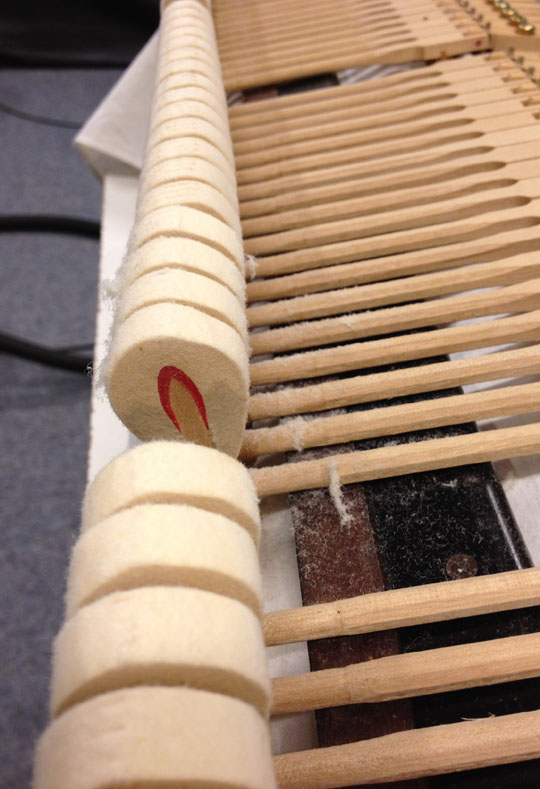
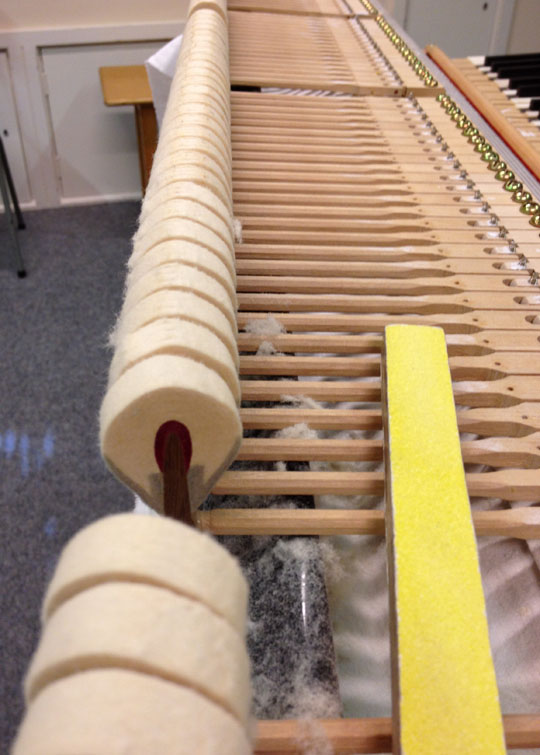
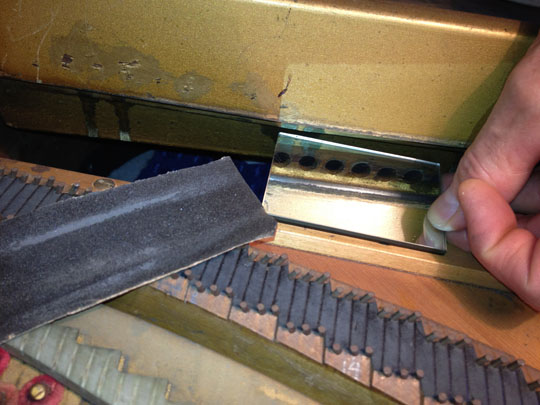
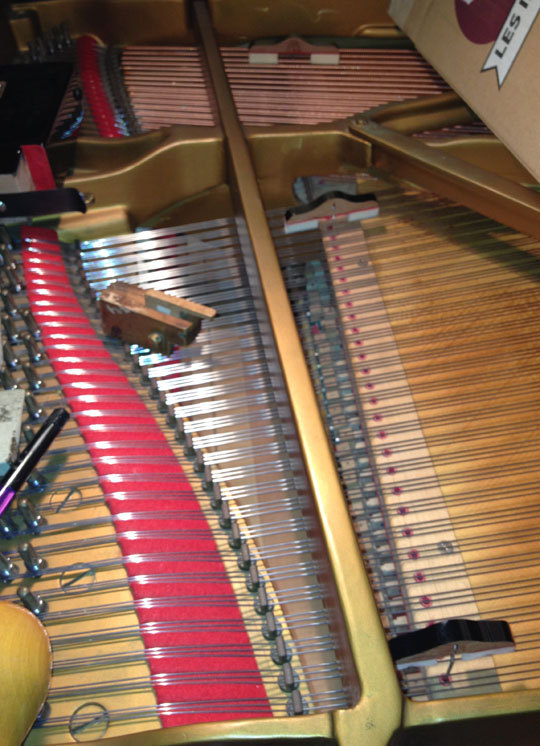
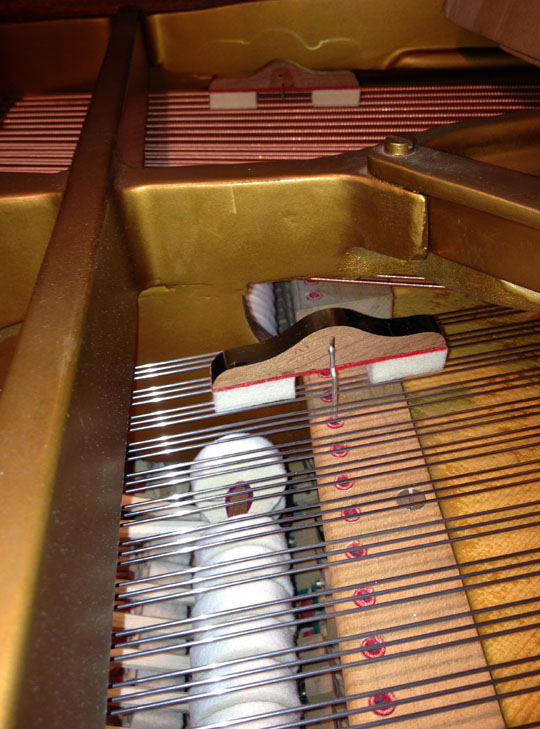
These pics show the re-facing in progress. The end result is basically a tidied-up version of what you see in the mid section (where my file is resting). The hammers closer to view (the lower treble section) show how wide the strike surface had become.
Posted in Technical | Tagged | Leave a comment

Yamaha E116N Checking Distance Regulation


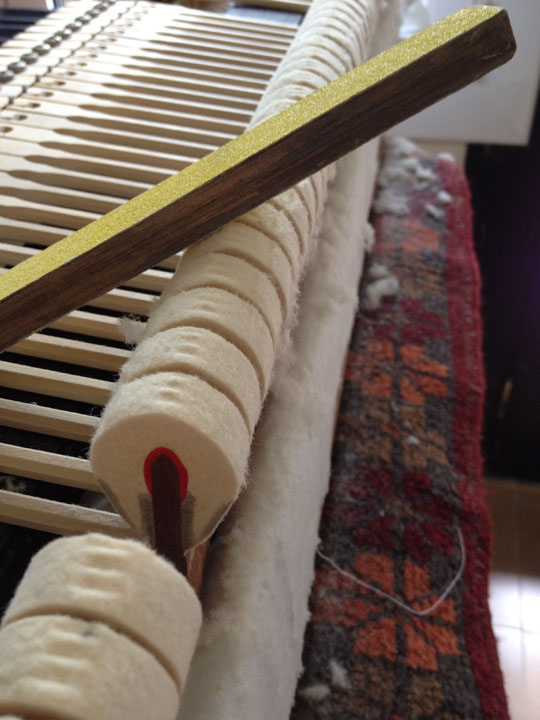
It’s surprising how poorly (factory) regulated Yamaha uprights are, compared to the Yamaha grands. All Yamaha uprights in this institution required regulation of the hammer checking distance. Doing this significantly improved the repetition.

The two hammers to the left have their original factory settings, the two hammers to the right have the new settings (checking as close as possible, without blocking on soft blows):

Posted in Technical | Tagged | Leave a comment

Yamaha & Kawai Light Hammer Re-facing


I think of this light re-facing as an institutional re-facing, because the need to preserve as much felt as possible means that the actual hammer nose is barely re-faced: this is only possible where hammer centres are stable and where the hammers have not been re-positioned.

Basic needling of the hammers is done prior to the refacing because, of course, heavy needling distorts the profile.

The first picture shows the Kawai hammers in the process of re-facing, with the proximal sides of the first 4 lower mid section hammers approximately re-shaped:


The second pic shows the Yamaha C3 with the lower mid section hammers done (and how approximately how much felt was removed to achieve this profile):

Posted in Technical | Tagged , | Leave a comment

Steinway O Grand New Hammers & Shanks


New hammers & shanks helped bring this old Steinway model O into shape.

Despite the fuzzy picture, you can just about see the slight strike curve in the treble:


Also, notice the just-about-visible new lyre stays which I had to make and stain to match the lovely Cocobolo Rosewood casework:

Posted in Technical | Tagged , | Leave a comment

Sohmer Strike Curve


As so often (though not always), a curve in the treble hammer strike line was required. It was fun doing it on these Abel Premium Grade recoverings because, once the strike was right, the sound was a considerable improvement on the previous hammers.

Posted in Technical | Leave a comment

Sohmer Grand Key Preparation


Over 30 of this Sohmer’s ivories were chipped or cracked at the front edge, so to prevent further damage, orthodontic techniques were once more called into practice:

Posted in Technical | Leave a comment

Sohmer Grand String Levelling


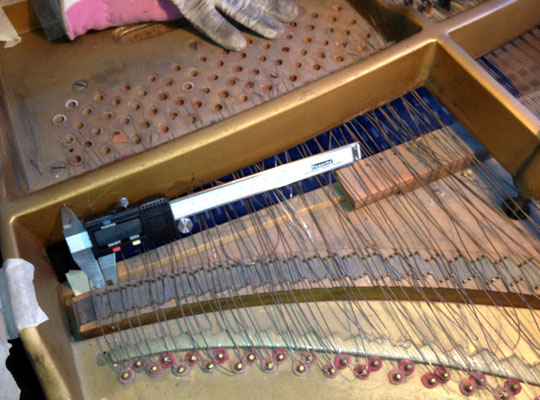
Levelling the strings was very straighforward on this Sohmer, which speaks well of the quality of its agraffes:

Posted in Technical | Leave a comment

Sohmer String Rubbing Errors


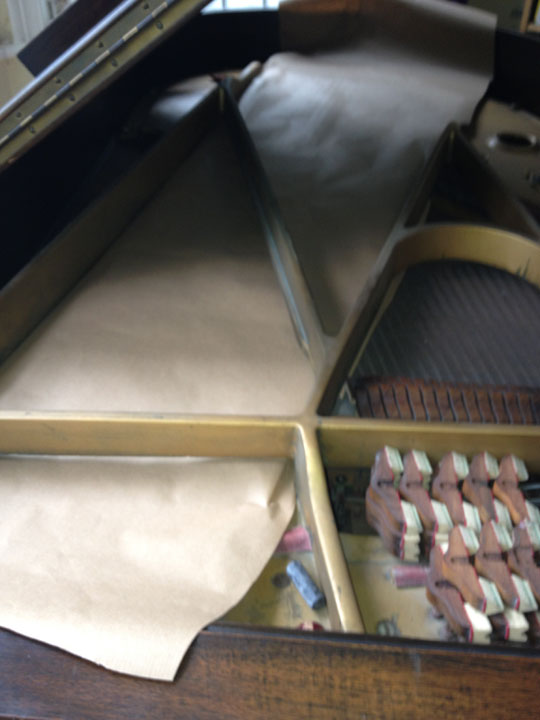
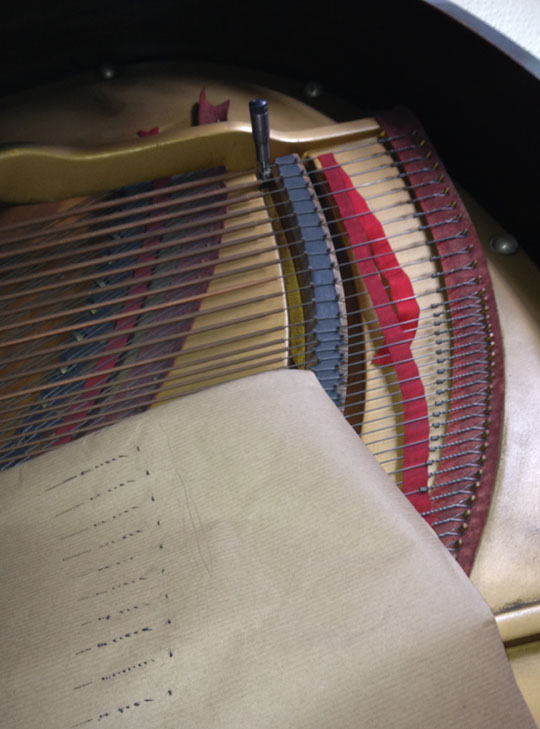
For the string rubbing, first the bass dampers are removed, so that the packing paper can be laid over the strings:


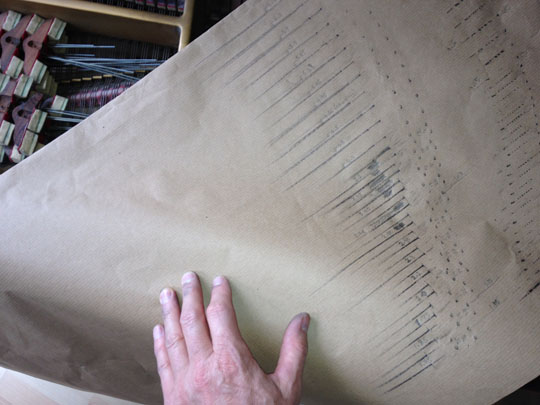
Then the string gauges are measured and transferred to the rubbing – but, as you can see, I made quite a few mistakes, had to rub out the figures, and get them right second time (they do say: “measure twice, cut once”…)


Posted in Technical | Leave a comment

Sohmer Grand Re-string


Usual Procedures for this very interesting instrument, with its slightly UNusual bridge-agraffe system.


Capo Tasto re-dressing:

But, as you can see from this image, the string gauges needed re-calculating. This was based on the sound of the piano prior to re-stringing – and confirmed by the somewhat erratic gauges found on the bridge. (‘Original'(?) gauges marked on distal edge of bridge cuts; re-calculated gauges on proximal edge):
Bridge pins on higher treble & bass, bridge agraffes everywhere else – nice!

Then, with lower treble done, the bass strings were removed and the soundboard cleaned in readiness for the last long leg of re-stringing:

Posted in Technical | Tagged | 1 Comment

Steinway Damper Lift


Here’s a (not very good) (again – sorry!) picture of re-installing the dampers after re-stringing. First the test dampers are set using the half-blow block:


Then the test dampers are checked against the test hammers. You can just about see the half-blow line marked on the side of the raised hammer (look between the strings):

Posted in Technical | Tagged , | Leave a comment