Once everything – regulating, tuning, voicing – is done, then the hammer strike position can be checked and, if necessary, moved.
Just as plucking the strings on a guitar in various positions along their length produces a varying tone (close to the bridge = “harsh”; close to the fretboard = “soft”), the position the strings are struck along a piano strings’ length gives a more or less optimal tone. The strike on this Steinway D was leaving the critical treble area sounding a bit wooden and inelastic (lots of hammer noise relative to ringing string) (describing sound in words is, basically, not worth attempting, I know, but I do like to go for the impossible!).
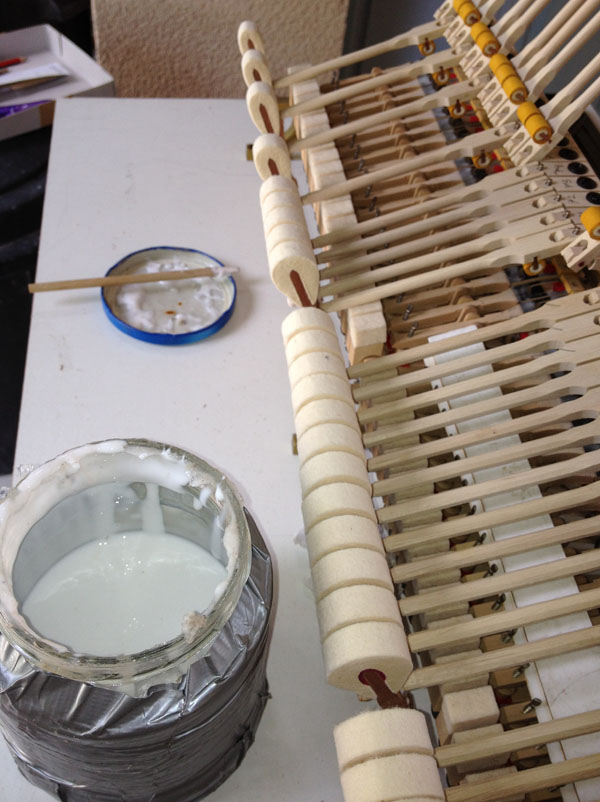
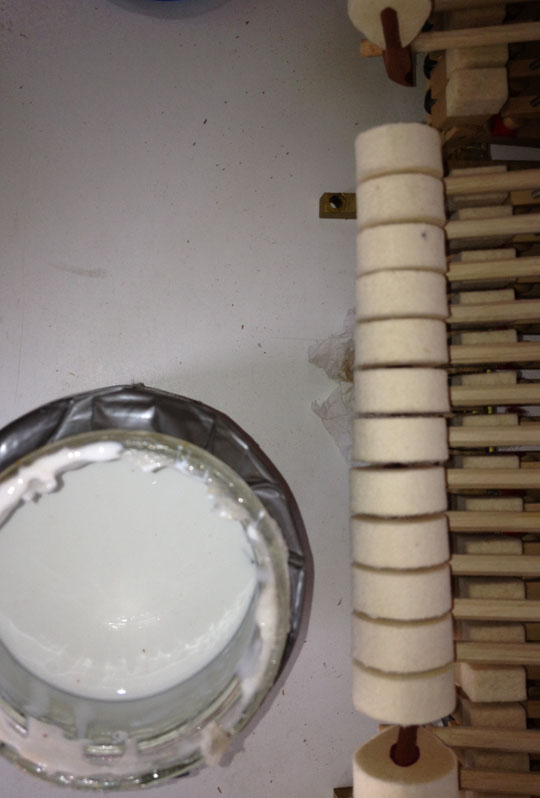
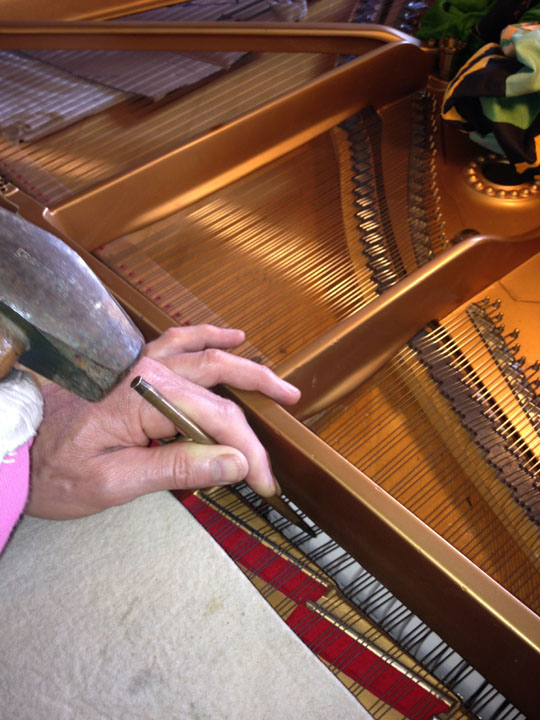
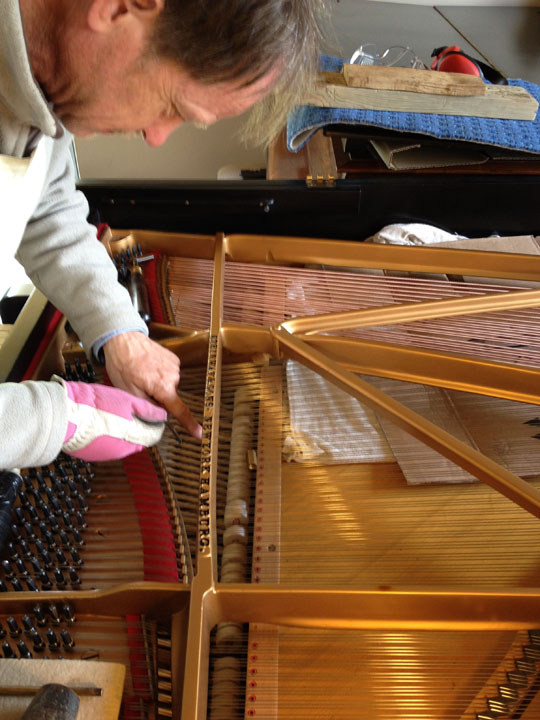
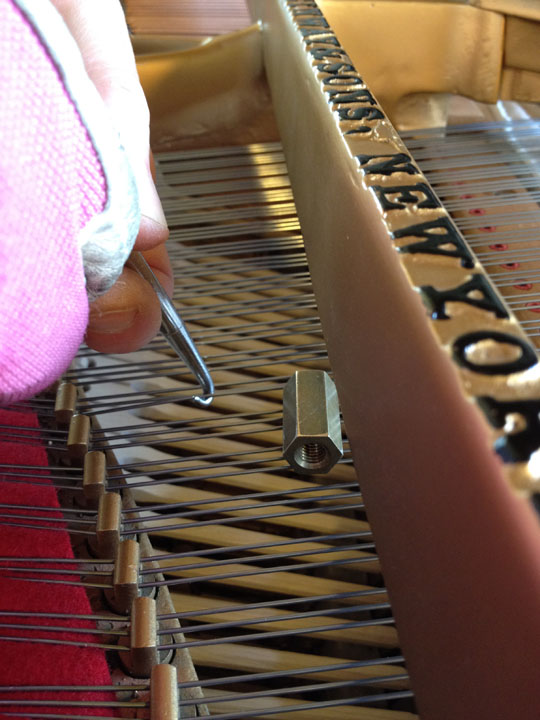
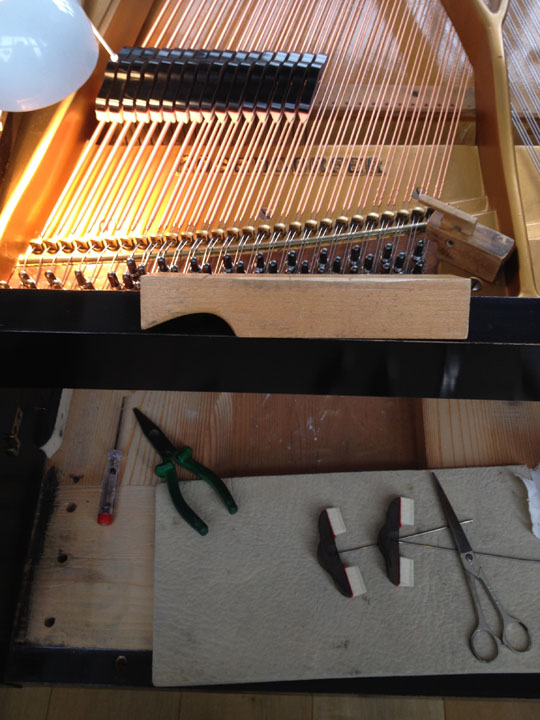
So, some ruthless snapping off of hammers ensued.
Ready……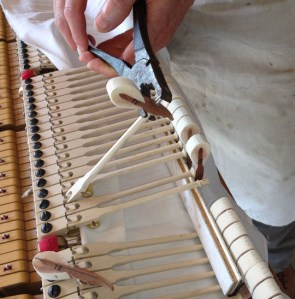
SNAP!
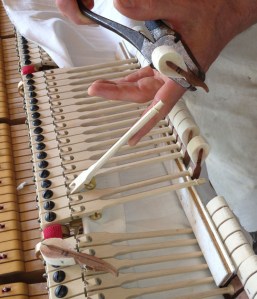
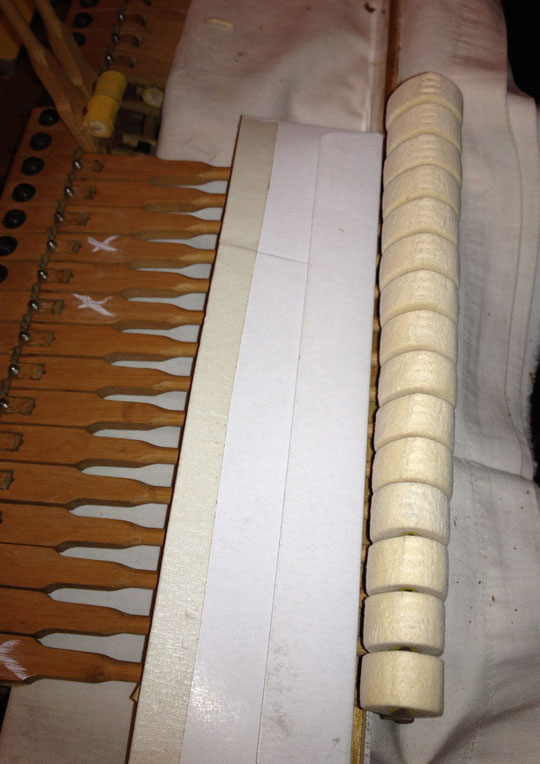
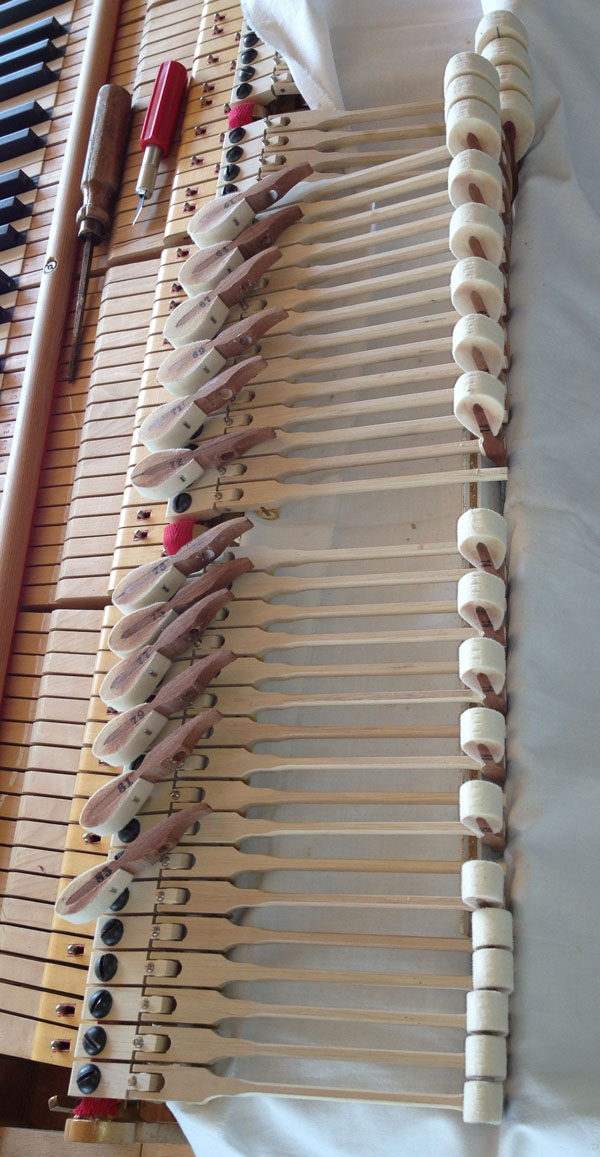
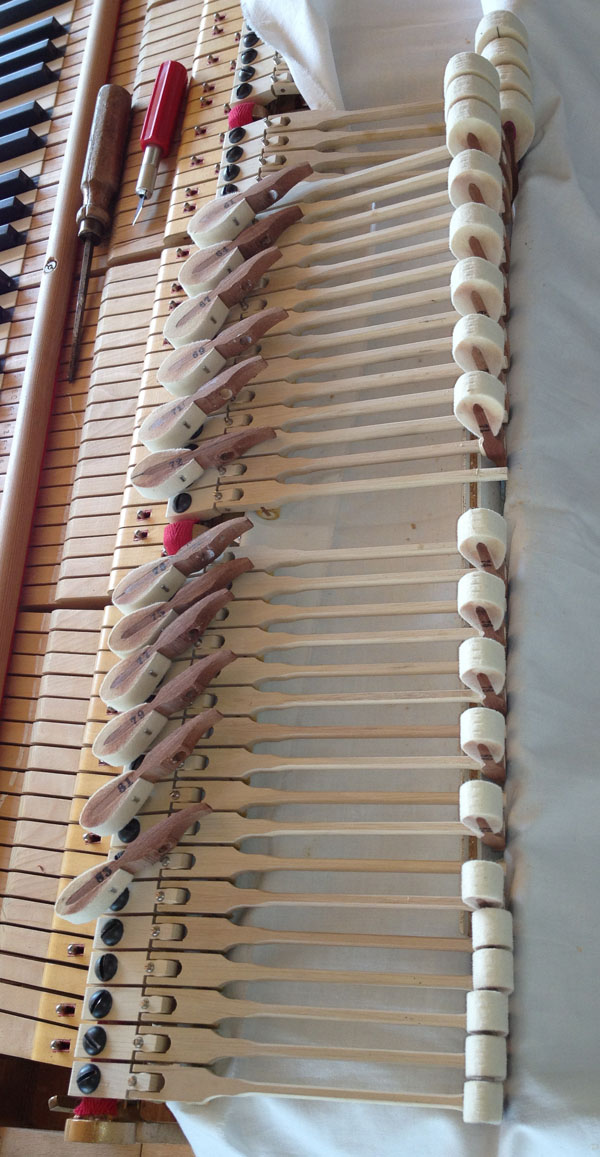
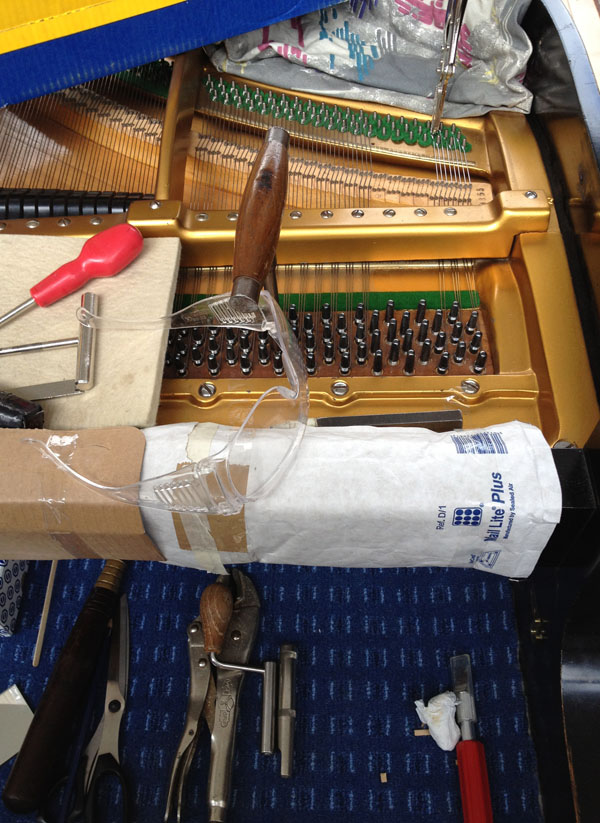
Then it’s just a case of snapping off hammers over the whole area that needs correcting, cleaning the shanks, reaming the shank holes – then running tests to find the right strike point…….

And lastly re-fitting the remaining hammers in between the test hammers to give as straight a line as possible (though if a curved hammer line is what’s required to get the right sound, a curved hammer line it will be!)…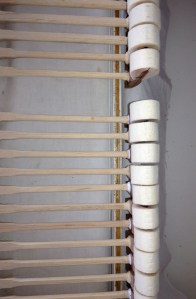
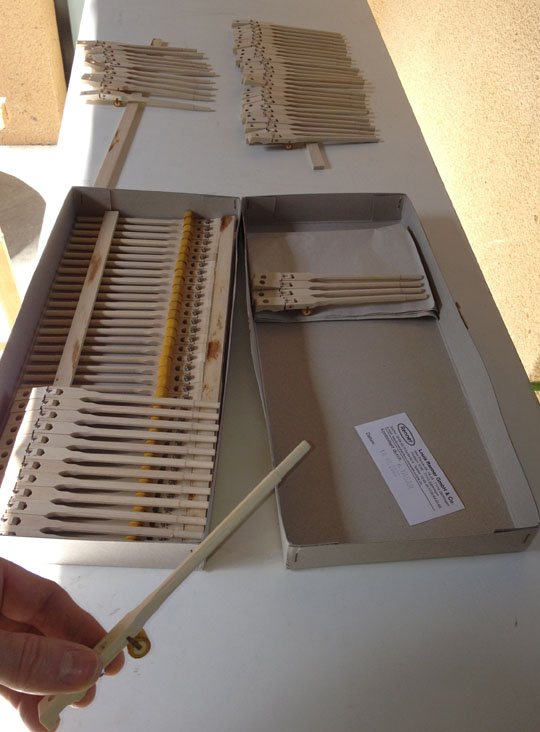
Then all that remains to do is the usual burning & travelling of hammers, alignment to unisons, filing to string height……and fine voicing.











 Specialist Piano Services