Grand Hammer Notch


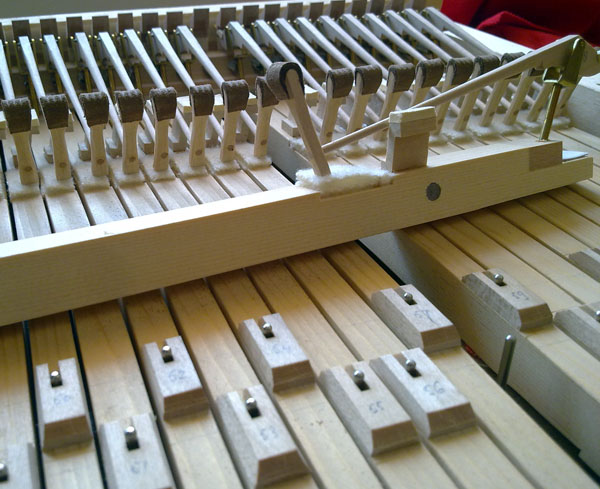
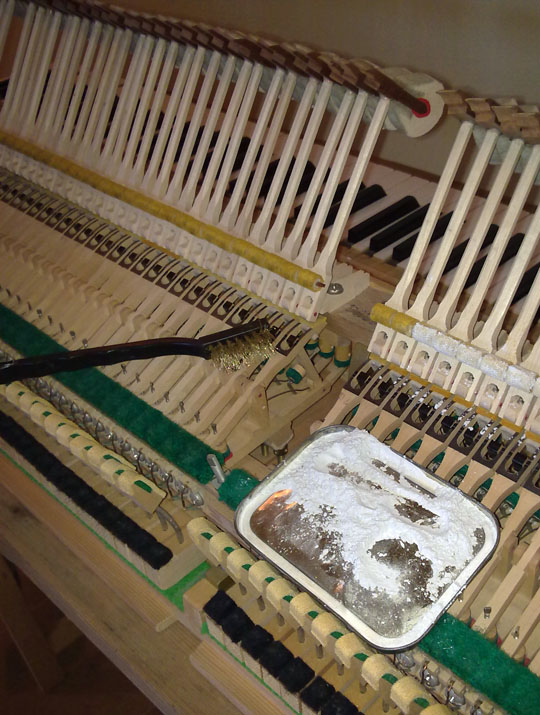
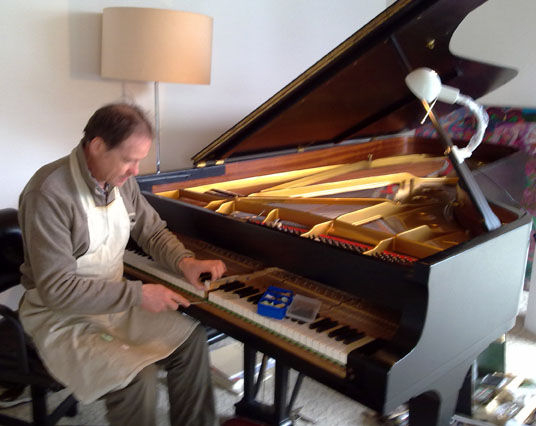
Some older grands (even up to the 1930s), rather than a roller, have a notch on the hammer shank.

The notch on this Cramer grand, once brushed up and rubbed with soapstone (see Grotrian-Steinweg Rollers), gave a perfectly good and serviceable set-off & aftertouch:

Posted in Technical | Leave a comment

Key Fillings


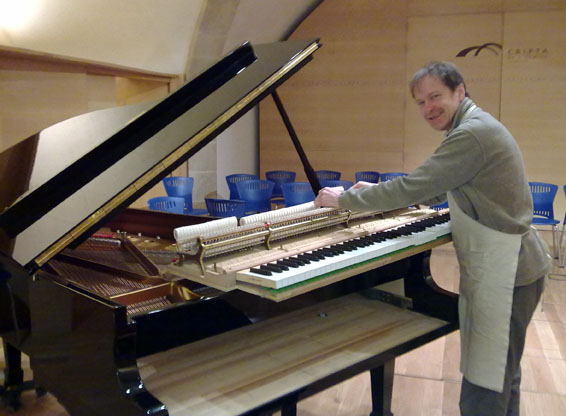
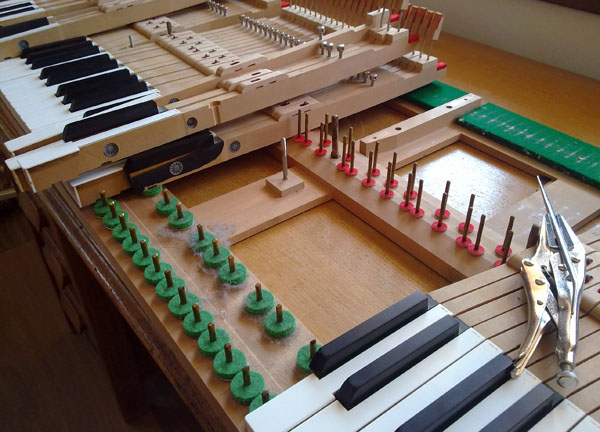
Ivories can easily get chipped at the front. For this Cramer grand, I first re-glued 2 dozen of the fronts, then had to fill the chipped ones.

Here, I used an epoxy resin with a splash of white guache. It’s far from perfect, but finding ivory replacements is increasingly difficult, these days.

I find the guache-resin mixture difficult to apply – but it remains quite plastic for at least 3 hours, so can be moulded with a knife, to deal with the inevitable sag of larger fillings.

– O, to be a dentist! (not!).

Posted in Technical | Tagged | Leave a comment

Key Release in Spain


High humidity levels seem to be widespread in Catalunya – as the common problem of tight keys shows. Steinway, Yamaha, and fortepiano were all in need of having their keys released at the balance and/or chasing points:

I am returning to service this Steinway model B (in The Crypt, Cambrils).

Releasing the keys on a Yamaha C3. The balance hole, in particular, of each key has become tight again, 4 years after having been released – such is the problem of humidity in this lovely region of Spain.

Releasing the keys on a Gerard Tuinman fortepiano: all bearing points – balance hole, chasing, front guide (all wood, of course) tended to be tight.

Posted in Technical | Tagged , , | Leave a comment

Fortepiano Gerard Tuinman


This lovely fortepiano by Gerard Tuinman (Utrecht, Holland) is owned by Heidrun Bergander.

Just look at the delicate hammer action!

Posted in Technical | Tagged | Comments Off on Fortepiano Gerard Tuinman

Grotrian-Steinweg Rollers


Brushing up rollers (using a suede brush) is essential for a clean, smooth set-off and aftertouch. The brushing not only partly removes indentations from the repetition lever, it also helps remove most of the Winslip (other anti-friction coatings are available) from the roller, too. I have to say: I really do not like these anti-friction coatings! They just rub off into the roller leather, thus creating 2 hard, noisy contact surfaces and more trouble than they’re worth.

I find it much better to rub up the rollers and rub in SOAP STONE. Once this operation has been repeated (several visits), the rollers retain a functional amount of the soapstone (Steatite/French Chalk) – and thus a smooth, noise-free set-off.

This photo shows the rollers on a Grotrian-Steinweg 189 grand (in Barcelona, Catalonia) having already been rubbed up (then vacuumed/blown off), with soapstone being rubbed in.

Posted in Technical | Tagged | Comments Off on Grotrian-Steinweg Rollers

Steinway Repetition


Steinway Repetition Steinway Repetition

It is worth repeating! As fast as you can? Well, all too often, the repetition springs are set tooooo tight. Of course, this is to ‘improve’ the repetition. But then the hammers start ‘bubbling’ (uncontrollably re-striking the string) – and this can often be heard in concerts, or even on recordings.
So, to attempt the best compromise between too fast and too slow, all action settings must first be regulated (including a correct checking distance of no closer than 15mm):

Then the repetition springs can be adjusted so that each hammer will rise promptly from checking to set-off point –  without bubbling! (making bass hammers slower than trebles, to allow for the mass/momentum problem) This can be both seen and felt.

Easy to describe – much harder to achieve, of course!

Posted in Technical | Tagged | Comments Off on Steinway Repetition

Steinway Regulating After Touch


Regulating the Aftertouch is definitely a touchy-feely operation!

Once keyboard and keys, brushing-up rollers, levers-to-hammers, blow distance, jacks-to-rollers, set-off & drop have all been adjusted, basic depth of touch and aftertouch can be regulated.

The depth of touch is just a basic setting. The touch depth block is just a guide. The actual and ultimate setting is determined by the FEEL of the jack releasing from the roller (the hammer releasing from the key): this is the AFTERTOUCH. Super-thin paper washers (factors of 0.01 mm) make all the difference to evenness (regulation) of this setting from key to key.

Posted in Technical | Tagged , | Comments Off on Steinway Regulating After Touch

Steinway D Tuning – Like Home


Ah! Tuning a Steinway D – it’s just like being back in the factory, everything’s so familiar and straightforward – especially when it’s a superbly reconditioned instrument by Jeff Shackell.

Posted in Technical | Tagged | Comments Off on Steinway D Tuning – Like Home

Upright Piano Voicing


Voicing an Upright Piano – especially when it’s only being ‘equalised’ (evening out the response) – is usually quite quick and easy, because you don’t have to keep moving the whole keyboard/action in and out of the piano!

The actual needling tool (the one I use for uprights) is at the foot of the picture, next to the chalk: It’s a simple cast brass block, which holds 4 guage 6 sewing needles (each about 5 mm long).

The Continental-style tuning wedge (a leather-wrapped hornbeam split wedge) is ideal for isolating single strings and thus identifying which corresponding area of the hammer requires needling.

This Welmar was soon sounding good – and much more easily controlled by the pianist.

Posted in Technical | Tagged | Comments Off on Upright Piano Voicing

Benjamin Guitar at Work


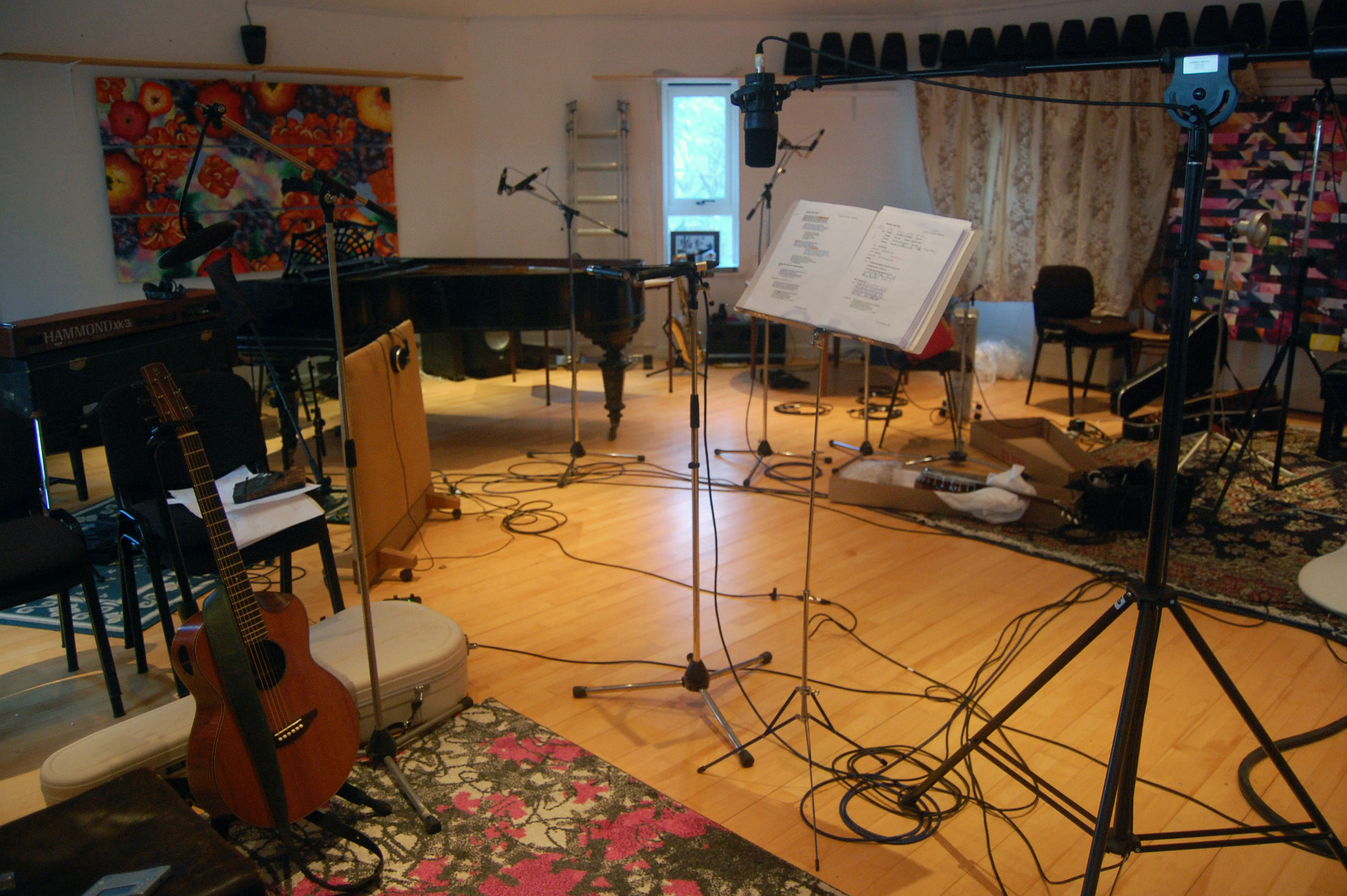
Here’s a promised photo of my Orchestra Model guitar, built by Nick Benjamin, which I picked up on my birthday, in December. The pic shows the gorgeous steel-string already at work – its first recording, for my second CD of songs A Year in the Life of Life – at Challow Park Recording Studios.

We’ve still some work to do on the album, but I hope that soon the songs will be available on Sound Cloud.

Posted in Technical | Tagged | Comments Off on Benjamin Guitar at Work